
Winter Driving Safety & MVA Recovery Guide
The transition to winter driving conditions in Calgary especially along major routes such as Deerfoot Trail and Stoney Trail changes the physics of travel in an instant. Every year, the first snowfall brings hundreds of collisions. At Jacksonport Sports Physiotherapy in Calgary NE, serving nearby communities like Airdrie and Chestermere, our commitment to holistic health includes not only treating injuries but also providing proactive education to help prevent them. This comprehensive guide explains the non-negotiable science of winter driving safety and outlines the essential steps for your physical health and insurance protocol after a motor vehicle accident (MVA).
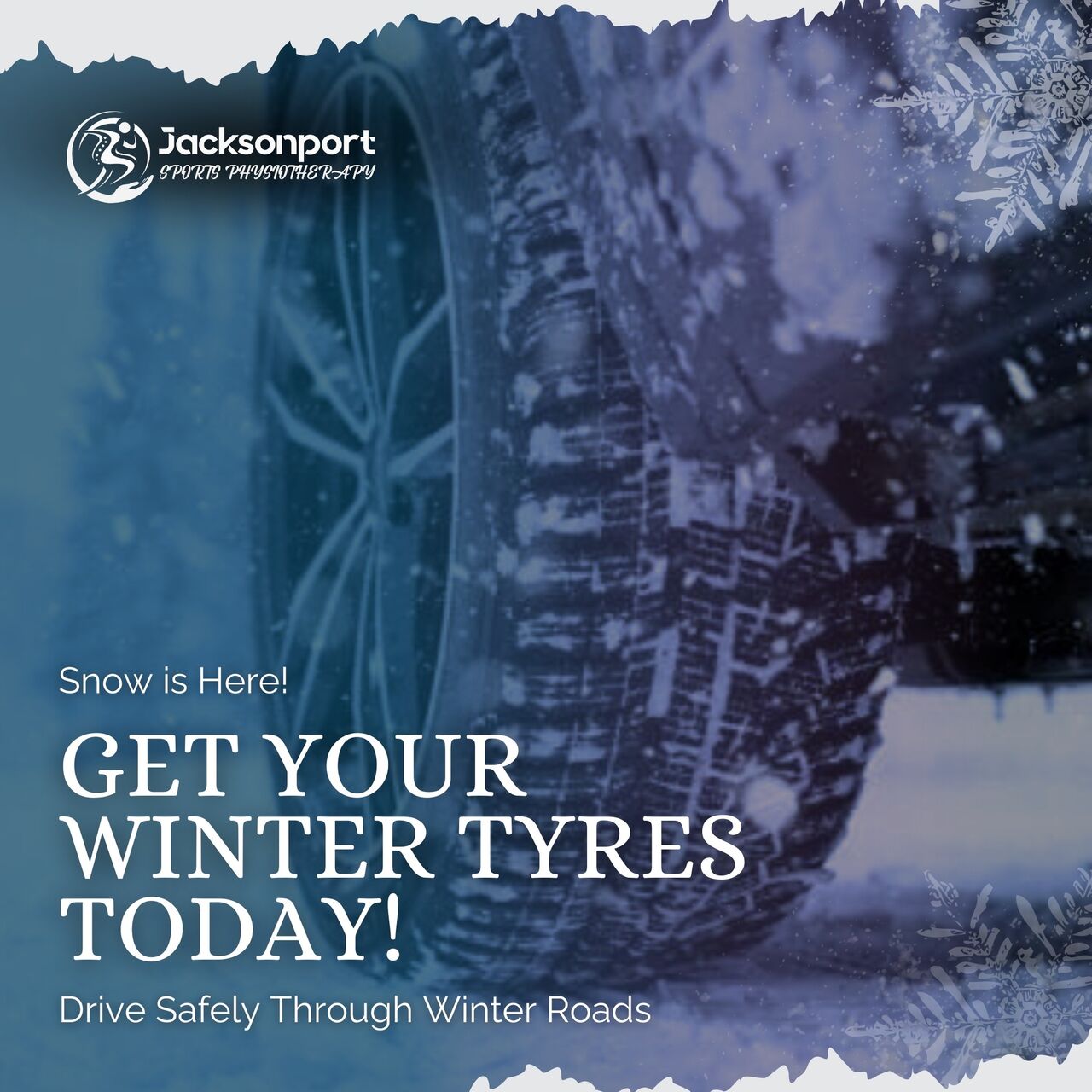
The Science of Safety: Why Winter Tires Are Essential
As specialists in biomechanics and physics, we view your vehicle’s tires as its most critical safety component. A common question we hear in Calgary NE, Airdrie, and Chestermere is: Are winter tires really necessary if I have all-seasons and 4x4? The evidence-based answer is yes.
The Critical 7°C Rule
Rubber composition is the single most important factor in tire performance. Below 7°C, summer and all-season tires begin to harden and lose the flexibility needed to grip the microscopic texture of cold pavement. At these temperatures, the rubber behaves more like rigid plastic, drastically reducing traction. In contrast, winter tires are engineered with high-silica, hydrophilic rubber compounds that remain flexible in low temperatures, allowing the tire to “mold” to the road for consistent grip.
Stopping Distance: The Lifesaving Difference
Material science directly affects braking distance. On icy roads at only 50 km/h, a vehicle with winter tires can stop up to 18 meters three to four car lengths shorter than one equipped with all-season tires. In fast-moving traffic or busy intersections near our clinic on 104 Avenue NE, these 18 meters can mean the difference between a near miss and a painful whiplash-causing collision.
Sipes and Traction Dynamics
Winter tires also feature thousands of microscopic slits called sipes. As the tire rolls, these sipes open to bite into snow and slush, then close to pump water away from the contact patch. This reduces hydroplaning and improves traction, especially during the unpredictable freeze thaw cycles common in Calgary.
Essential Winter Driving Tips for Physical Safety
Equipment is only half of the safety equation; driver behaviour completes it. Safe commuting throughout Jacksonport, Skyview Ranch, or Airdrie requires intentional adjustments to protect your physical well-being.
Ergonomics for Injury Prevention
Proper positioning in your vehicle can significantly reduce the severity of injuries during a crash. Ensure the top of your head restraint aligns with the top of your head, maintaining less than two inches between your head and the restraint to minimize whiplash forces. Your chest should remain at least 10 inches from the steering wheel to prevent injury from airbag deployment.
Defensive Driving on Black Ice
Black ice forms rapidly on overpasses and bridges common along Stoney Trail due to increased air circulation. If your vehicle begins to slide, maintain firm, steady pressure on ABS brakes and keep your eyes focused on where you want the vehicle to go. Avoid looking at hazards such as ditches or barriers.
The Reality of Accidents: Understanding Impact & Injury
A common misconception is that low-speed collisions cause only minimal injury. Medically and biomechanically, this is false.
The Physics of Collision and Soft Tissue Trauma
In a rear-end impact, the seat propels your torso forward while your head initially remains still, forcing the cervical spine into an unnatural “S-curve.” This sudden motion can stretch or tear ligaments, strain muscles, and compress spinal discs. Even a 10 km/h collision can impose forces two to three times greater on the neck than on the vehicle itself.
The Adrenaline Mask
Immediately after a crash, the body releases adrenaline and endorphins that temporarily reduce pain. Many individuals feel “fine” at the scene, only to experience significant symptoms—headaches, stiffness, dizziness, and neck or back pain—within 12–24 hours. Never agree to a final insurance settlement before receiving a proper medical assessment.
Your Medical Recovery: MVA Rehabilitation at Jacksonport Sports Physio
Recovery after an MVA is time-sensitive. At Jacksonport Sports Physiotherapy, we specialize in Motor Vehicle Accident Rehabilitation, guiding patients through both physical healing and the complexities of the Alberta insurance process.
The Golden Window: Alberta’s 10 Day Rule
According to Alberta’s Diagnostic and Treatment Protocols Regulation (DTPR), you must be assessed by a physiotherapist or chiropractor within 10 days of your accident. This timely assessment allows for an official WAD (Whiplash Associated Disorder) diagnosis within the DTPR framework, which automatically approves you for an initial block of 10 or 21 treatments without waiting for insurance approval.
Our Multidisciplinary, Team-Based Approach
Our clinic integrates physiotherapy, chiropractic care, massage therapy, and advanced modalities to facilitate complete recovery.
1. Physiotherapy
Physiotherapists conduct detailed biomechanical assessments and develop individualized treatment plans. Early phases focus on gentle mobility and swelling reduction, progressing toward strengthening deep stabilizing muscles and restoring functional movement.
2. Chiropractic Care
Chiropractors address joint restrictions in the spine, often present after MVAs. By restoring normal alignment and segmental mobility, they reduce mechanical stress and allow muscles to relax.
3. Massage Therapy
Massage therapy helps reduce muscle guarding, improve circulation, and decrease cortisol levels associated with stress and trauma.
4. Advanced Modalities
Shockwave Therapy stimulates tissue regeneration, while Targeted Radiofrequency (TR) Therapy increases blood flow, reduces deep muscle spasms, and accelerates healing.
Navigating Insurance: Stress Free Direct Billing
The administrative burden following an accident can be overwhelming. We simplify this process so you can focus on healing.
Understanding Section B Benefits
Alberta auto insurance policies include Section B Benefits, covering medically necessary treatments physiotherapy, chiropractic care, and massage therapy regardless of fault. Coverage typically extends up to $50,000 or two years, whichever comes first.
Seamless Direct Billing
At your initial MVA assessment, provide your claim number and adjuster’s contact details. Our team submits required documents such as the AB-1 (Notice of Loss) and AB-2 (Assessment Report), minimizing out of pocket costs and eliminating paperwork for you.
Holistic Health: Supporting the Mental Side of Recovery
Physical injuries often coincide with emotional challenges, including anxiety, hypervigilance, or fear of driving especially in winter conditions. We integrate pain education into treatment to help patients understand that hurt does not always equal harm. When needed, we facilitate referrals to trusted mental health professionals in Calgary for additional support.
Conclusion: Safe Roads, Healthy Bodies
The winter roads surrounding our clinic at #120, 3730 104 Avenue NE and nearby communities like Airdrie and Chestermere demand preparation and respect. Prioritize winter tires, adopt defensive driving techniques, and remember that if an accident occurs, Jacksonport Sports Physiotherapy is ready to support you through evidence-based rehabilitation and stress-free insurance navigation. We are more than a clinic we are your committed partners in maintaining a safe, healthy, and active life year-round.